
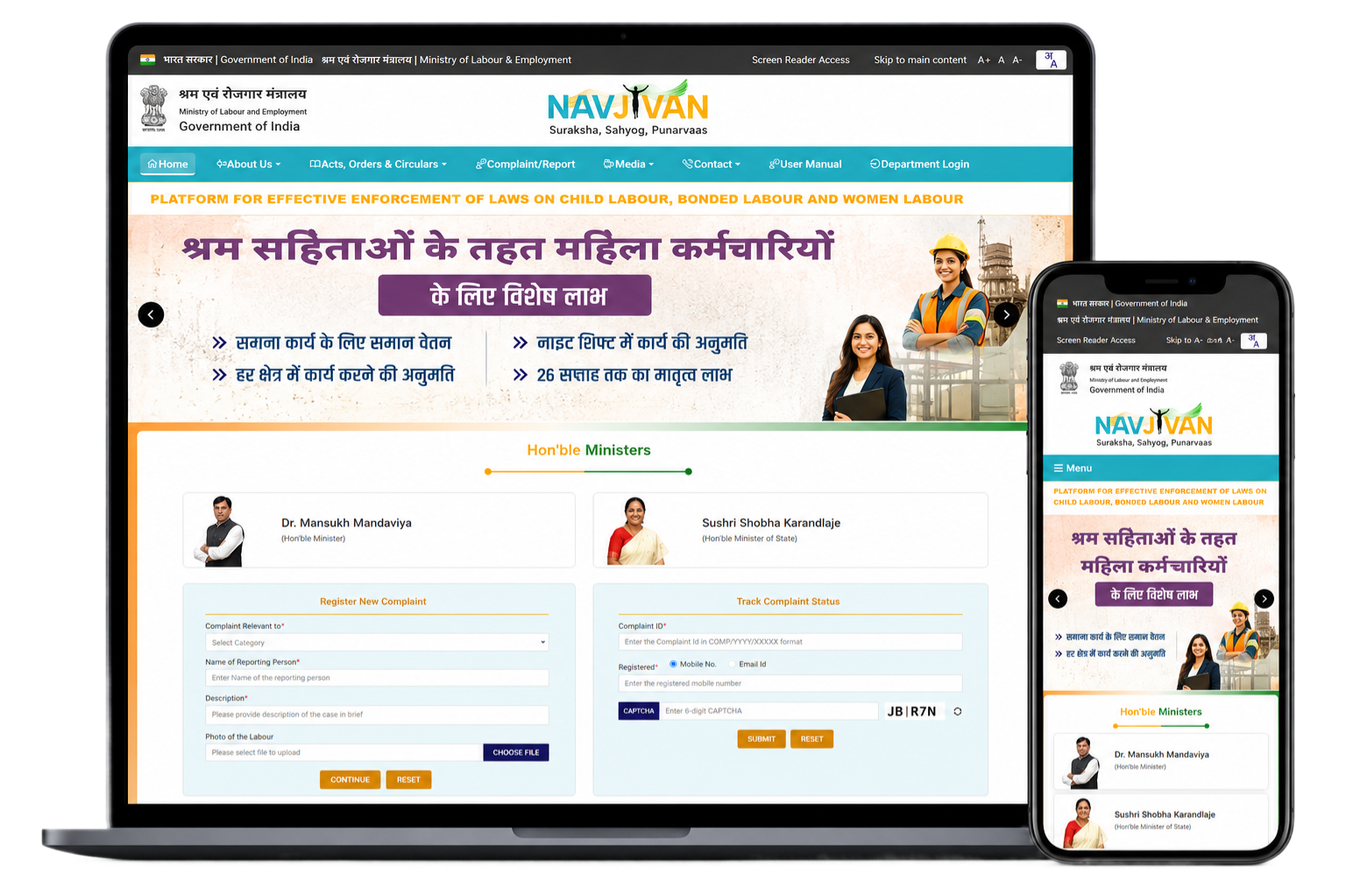
Business Context
Why this project mattered: Every delayed intervention can significantly affect the safety and rehabilitation of vulnerable individuals. The platform was designed to help government authorities monitor cases efficiently, coordinate timely action, and improve transparency across the complete rehabilitation lifecycle.
Monitoring bonded labour and child labour cases across different states was largely manual, making it difficult to identify victims, coordinate stakeholders, and ensure timely intervention. The absence of a unified digital platform limited visibility, transparency, and effective case management.
Create a unified national digital platform that enables real-time case registration, monitoring, interdepartmental coordination, and faster rehabilitation of bonded and child labour victims.
- Simplified workflows and reduced TAT
- Improved accessibility for workers
- Better tracking and real-time insights
- Standardized processes across states
The Challenge
Multiple user groups with diverse needs
Complex policies and compliance requirements
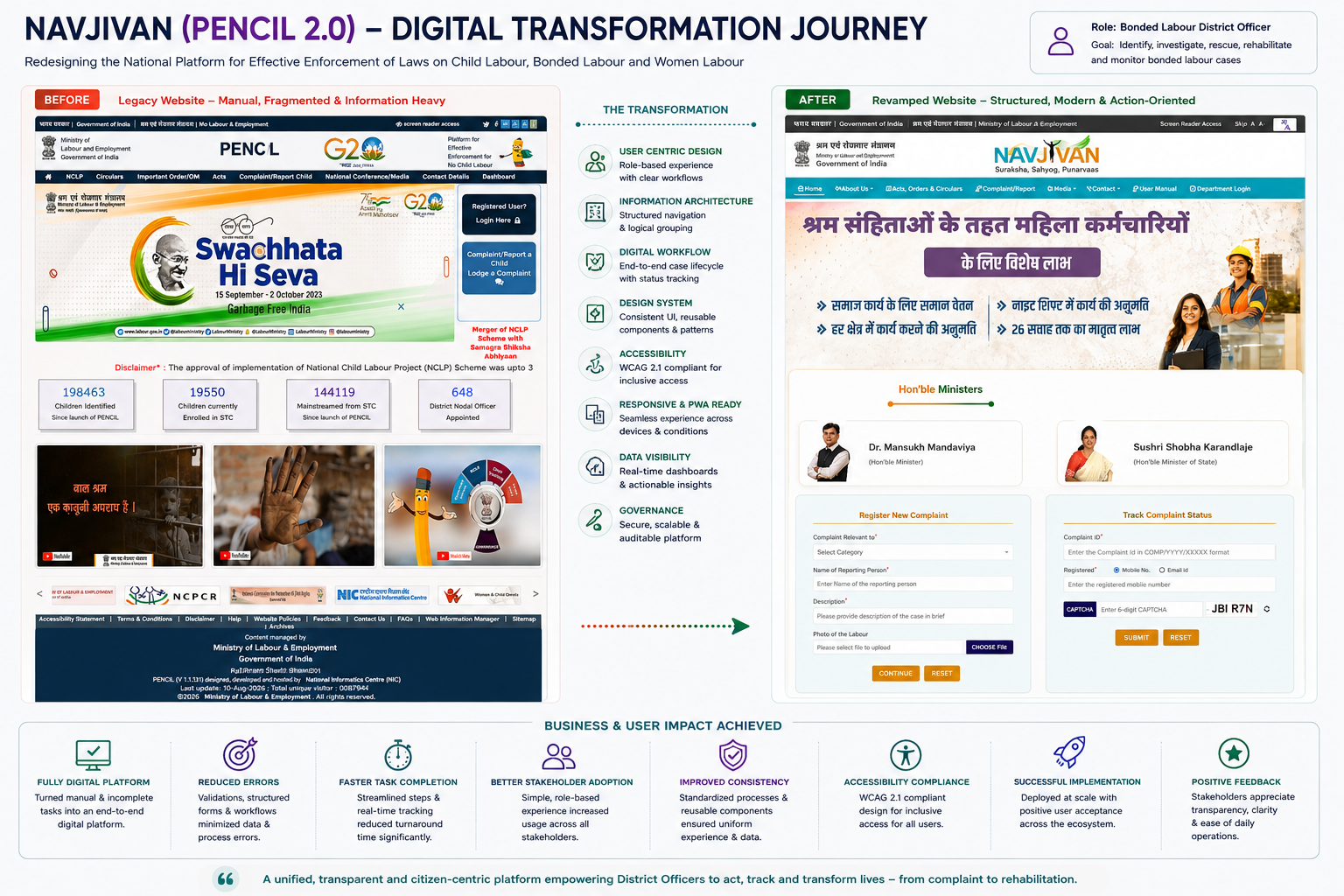
Legacy systems and fragmented data
Low digital literacy & accessibility barriers
High volume of applications & approvals
Need for real-time monitoring and reporting
My Role & Responsibilities
- Defined and led the UX vision and design strategy across the product lifecycle.
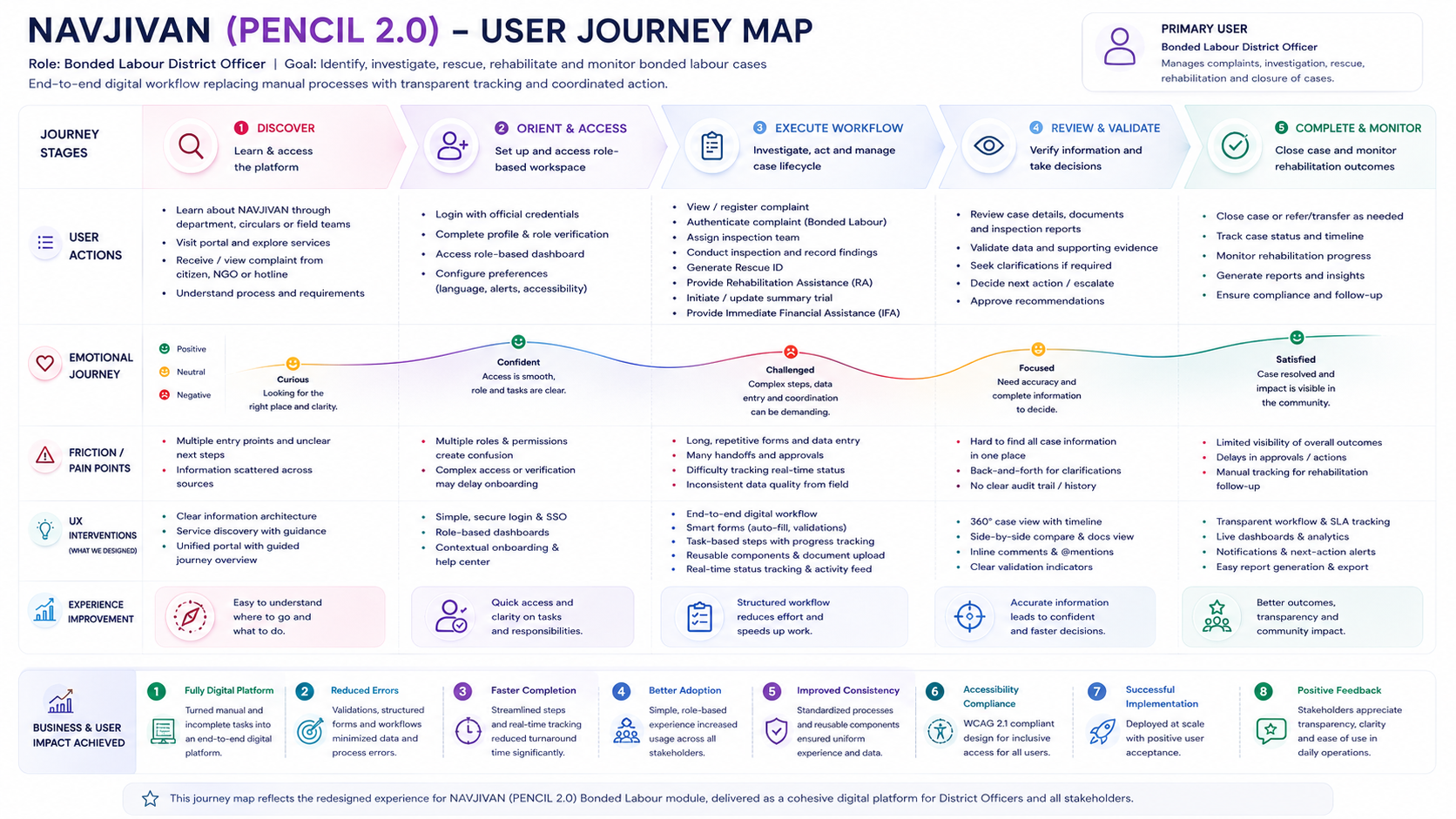
- Established scalable information architecture and role-based user journeys.
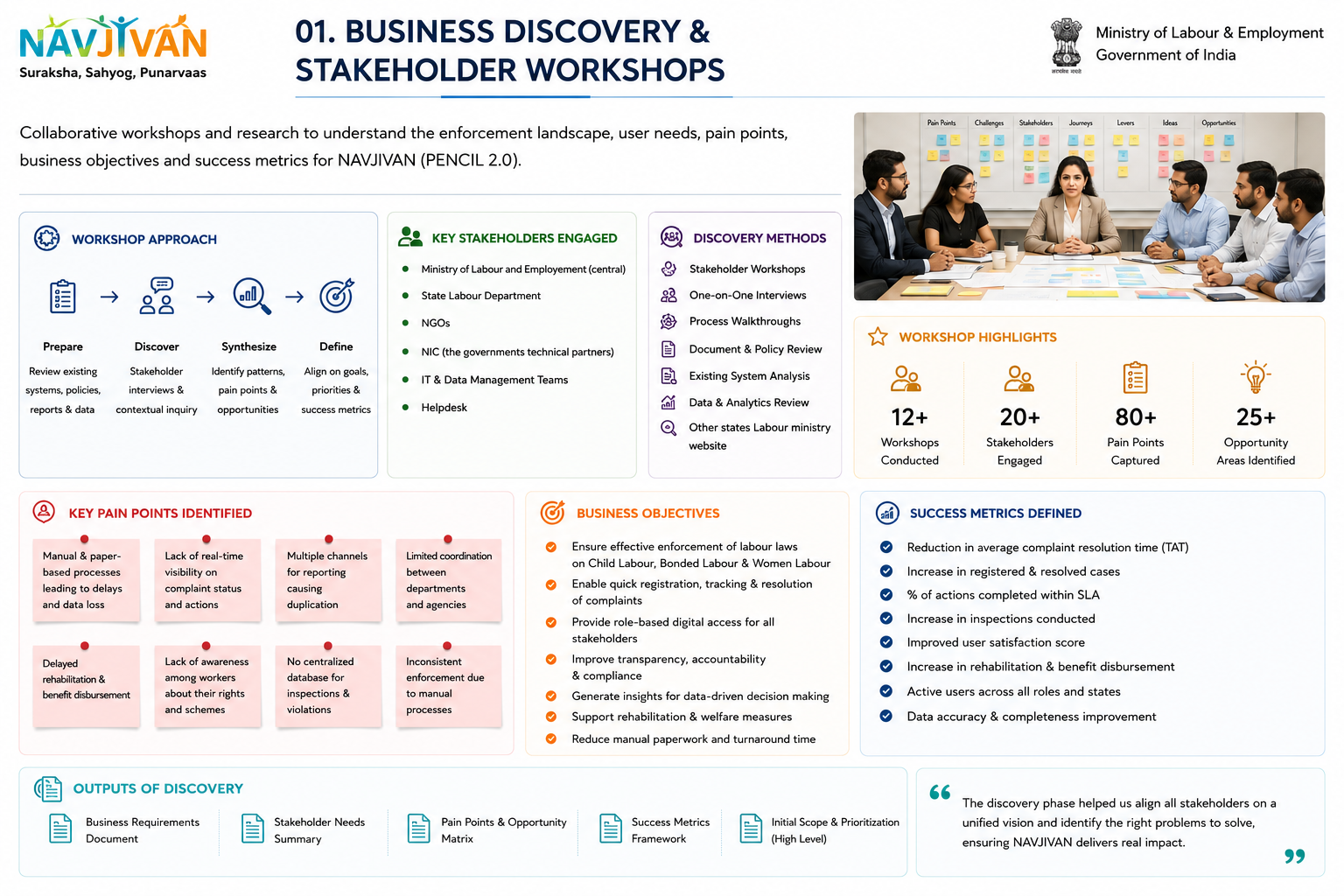
- Facilitated stakeholder workshops to align policy, business, and user needs.
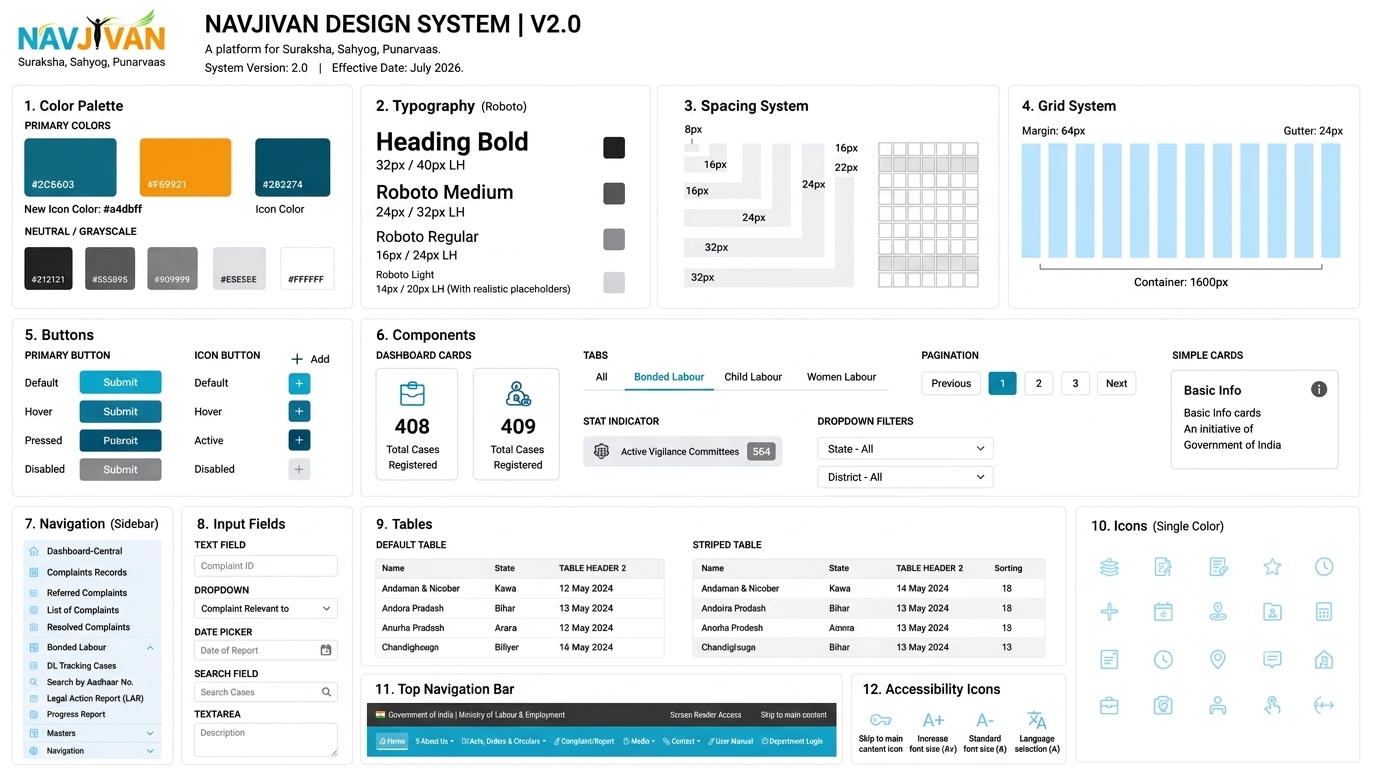
- Established a scalable design system to drive consistency and implementation efficiency.
- Drove cross-functional collaboration across product, engineering, QA, and government stakeholders.
- Governed implementation through usability validation, UAT, and design reviews.
- Mentored designers while establishing design governance and quality standards.
Stakeholders
Design Process (Our Approach)
Discover
Understand goals, stakeholders, and context
Research
User research, journey mapping, competitor study
Strategize
IA, user flows, prioritization, and experience strategy
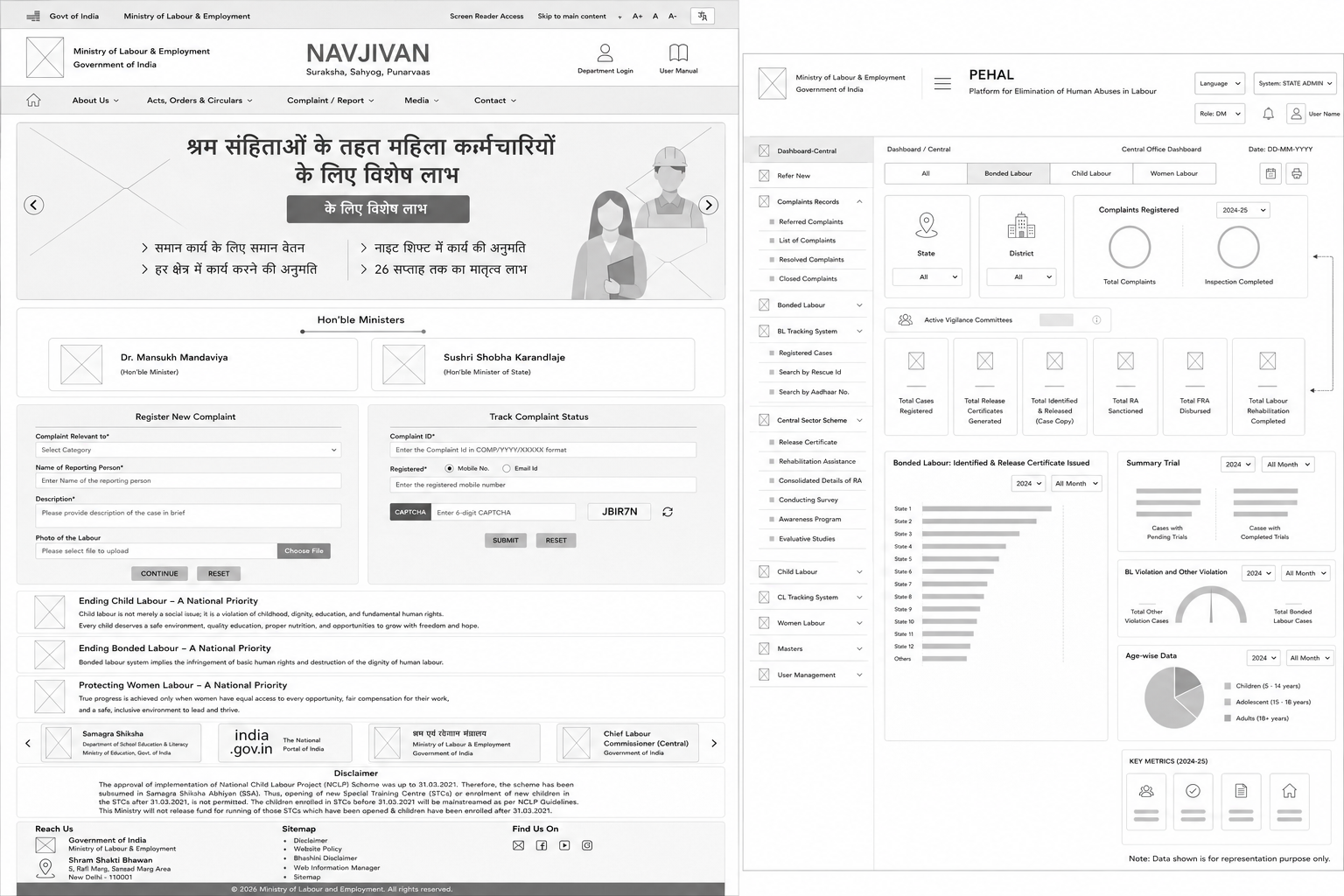
Design
Wireframes, UI exploration, design system creation
Validate
Usability testing, feedback, and refinements
Govern & Evolve
Implementation support and continuous improvement
UX Strategy in Action
Role-based dashboards with clear hierarchy and quick access to key services.
Simplified multi-step processes with guided flows and validations.
Created a scalable design system ensuring consistency, accessibility, and efficiency.
WCAG 2.1 AA compliant interface for inclusive user experience.
PWA + responsive design for seamless access anytime, anywhere.
Key Design Decisions
Single overview for all key services and statuses.
Customized experience for each user role.
Auto-fill, validations, and contextual guidance.
Live status updates for applications and approvals.
Reusable components and design tokens.
Selected Screens
Challenges & Trade-offs
Complex Compliance Rules
Balanced policy requirements with simple UX.
Diverse User Capabilities
Designed with accessibility and low literacy in mind.
High Volume & Performance
Focused on performance optimization and scalability.
- Some advanced features deprioritized in MVP for faster rollout.
- Standardized UI over custom experiences for consistency.
- More manual steps in some flows to ensure compliance.
Outcomes & Impact
Operational Efficiency
Reduced processing time by ~40% across key services.
User Satisfaction
Improved experience for workers and field officers.
Transparency
Real-time tracking increased trust and accountability.
Scalability
Platform now supports national-scale usage.